

A note before you begin. This article discusses childhood sexual abuse and the laws that limit when survivors can bring a civil claim. It contains no descriptions of abuse. If you would rather go straight to the practical information, the sections on the current deadline and on what you can do are below. Support resources are listed at the end.
If you were told you were too late
Some people find this page after decades. They considered it privately for years, told one or two people, or told no one. Some looked into their options once, learned that Massachusetts had already closed the door, and put the question away for good.
If that is you, the door may reopen. Briefly.
The Massachusetts Legislature is deciding right now whether to give survivors whose claims expired a defined second chance to bring them. Nothing here asks you to make a decision today. You do not owe anyone a lawsuit, a statement, or an explanation. But if this passes, it will come with a deadline attached, and you deserve to know about it while there is still time to think it through at your own pace.
What is on the table
In July 2026, State Representative John J. Lawn, Jr. of Watertown attached three changes to a moving bill as Amendment #110, "An Act enhancing remedies for survivors of childhood sexual abuse." The House adopted it and passed the bill. The amendment would:
- Remove the civil deadline entirely, going forward. A survivor could bring a claim at any point in life.
- Open a two-year period for expired claims. Survivors already timed out — including everyone past 53 — would get one defined window.
- Remove the cap on damages against charitable organizations in these cases.
It is not law. Senate Bill 3141 sits in a House–Senate conference committee, where a handful of legislators reconcile the two versions in private. Those talks can run into early January 2027. Whether the survivor provisions survive is undecided, and we would rather tell you that plainly than let you count on something that has not happened.
What the law does today
Under G.L. c. 260, § 4C, a survivor of childhood sexual abuse has 35 years from their eighteenth birthday to bring a civil claim. That is a cutoff at age 53.
A second path exists. If a survivor did not connect a psychological injury to what happened until later, the law allows seven years from the point they knew, or reasonably should have known, that the two were linked. Section 4C½ applies comparable timing to claims against organizations that failed to supervise or protect.
This framework came from a 2014 reform. It improved on what preceded it, and Representative Lawn helped pass it as a younger legislator. Twelve years on, it does not match what is known about disclosure.
The mismatch is straightforward. Recognizing what happened, naming it, and being ready to act on it are three separate thresholds, and decades can separate them. Many survivors reach the third one in their fifties or later — after a parent dies, after their own child reaches a particular age, after something in the news makes the door impossible to keep shut. Current law tends to expire at almost precisely the moment people become ready to use it. A deadline that runs out on schedule, just as survivors arrive, is not a neutral rule. It is a policy choice, and it has consequences.
THE BARRIER ALMOST NOBODY MENTIONS
Massachusetts also caps what a survivor can recover from a charitable organization. G.L. c. 231, § 85K limits liability to $20,000 where the harm occurred in the course of the organization's charitable activity. The statute carries one exception, at $100,000, and it is for medical malpractice claims against nonprofit health care providers. There is no exception for childhood sexual abuse.
The consequences are not abstract. A great deal of abuse happens inside institutions — congregations, schools, camps, youth programs, community organizations — and many of them qualify as charities. A survivor can prove every element the law requires and recover $20,000 from an organization that failed to protect them. That figure is not a remedy. It is a rounding error on an institutional budget, and any organization weighing the cost of acting knows it.
Amendment #110 would remove that cap for these claims. It is overdue.
Why a two-year lookback period is the provision that matters
This is the part most often misunderstood, so it is worth stating precisely.
Removing the deadline going forward helps people whose claims have not yet expired. It does nothing for someone who is 58 today. Their claim ended at 53, and prospective reform does not revive it.
A lookback period is the only mechanism that reaches those survivors. For a defined stretch of time, expired claims can be filed. When it closes, it closes.
Amendment #110 proposes two years.
Nineteen states have already eliminated the civil deadline for these claims. Rhode Island approved a two-year period in June 2026, after its Attorney General documented decades of institutional failure to protect children. Massachusetts led on this issue in 2014. It is now following.
Two years sounds like plenty. It is not, for someone who has spent thirty years not discussing this. Survivors in other states have lost the opportunity simply because word reached them in month twenty-two. That is precisely why we are publishing this now instead of waiting for the Legislature to finish.
Why this session is different
For more than a decade, survivors and advocates told the Legislature the same thing, and the bills died quietly in committee.
What changed in 2026 is that the person saying it was a legislator.
Alekman DiTusa, LLC · 1550 Main Street, Springfield, MA · (413) 781-0000 3
In May, Representative Lawn wrote publicly, for the first time, that he is a survivor of childhood sexual abuse. He described being harmed as a boy by two men he should have been able to trust — one a figure at a place he went to have fun, one connected to his church. Both are dead. He wrote about staying silent for most of his life, including through the years this subject dominated the front page of every paper in Massachusetts, and including a moment when his own mother asked him directly.
He had filed this legislation before — H.1829 this session, with S.1169 as the Senate companion — and watched it stall without ever explaining why it mattered to him. He chairs a major committee and has a long career ahead. He had no professional reason to put his name to this.
One line from what he wrote now appears on advocacy materials across the state: "Trauma does not operate on a legal timeline."
Senator Joan Lovely of Salem, a survivor who has championed this issue in the Senate for years, described the two of them in July as members of a club they wish they did not belong to.
We are not interested in making heroes of politicians. Survivors have been telling the Legislature this exact thing for years and were told the existing timelines were reasonable. It should not take a legislator's disclosure for the point to land. That it apparently did is worth sitting with — and it is also why this is finally moving.
Where things actually stand
- June 18, 2026 — The Senate passes S.3141.
- July 29, 2026 — Representative Lawn files Amendment #110.
- July 30, 2026 — The House adopts it and passes the bill.
- July 31, 2026 — Formal sessions close; negotiators are appointed.
- Now — The bill is in conference committee, and can be finalized any time through early January 2027.
Conference committees work behind closed doors. Provisions adopted in one chamber get narrowed or dropped in negotiation, and that outcome almost never arrives with a public vote anyone can point to afterward. Nothing about these provisions is safe.
That is the honest picture, and it is exactly why constituent pressure still matters at this stage.
What you can do
IF YOU WANT TO SUPPORT THE CHANGE
Write to your State Representative and State Senator. Find both by entering your address at malegislature.gov/Search/FindMyLegislator.
Because the bill has already cleared the House, the useful ask is specific:
Please do what you can to keep the survivor provisions of Amendment #110 — including the two-year lookback period and the removal of the charitable damages cap — in the final conference report on S.3141.
Include your street address so the office counts you as a constituent. You do not need to disclose anything personal. A message from someone who simply thinks the law is wrong carries the same weight as any other. Enough Abuse also hosts a pre-written message that takes under a minute.
IF YOU ARE A SURVIVOR WEIGHING YOUR OWN OPTIONS
If your claim is still within the current deadline — you are under 53, or the seven-year discovery provision may apply — do not wait on pending legislation. You have rights under existing law today. A bill that has not passed is no reason to let a live claim expire.
If your claim expired years ago, nothing is required of you right now. What helps is understanding what a claim would involve, so you are not starting from zero if the law changes. Learning your options is not the same as using them.
Records matter either way. Documents, correspondence, and institutional files get harder to locate every year. An attorney can begin that work regardless of where the deadline currently sits.
And doing nothing is a legitimate answer. Some survivors want a claim. Some want an acknowledgment from an institution. Some want neither and are living full lives they have no wish to reopen. Speaking with a lawyer commits you to nothing, costs nothing here, and can end after one conversation.
What a first conversation is actually like
People hesitate to call a law firm about this, usually for a few specific reasons. So, plainly:
You control how much you say. You can ask general questions about the law without describing anything that happened to you.
Conversations are confidential and free.
Asking commits you to nothing. Many people call once, get their questions answered, and go no further. That is a complete outcome, not a failed one.
You can bring someone — a spouse, a friend, a therapist.
We will tell you if we think you have no claim. You should not have to wonder, and you should not have to pay to find out.
If starting in writing is easier than starting on the phone, that works too.
Common Questions
Has Massachusetts passed the two-year lookback period?
No. The House adopted Amendment #110 on July 30, 2026 as part of S.3141. The bill remains in conference committee and has not been enacted or signed as of August 24, 2026.
What is the deadline under current law?
Age 53 — 35 years from the survivor's eighteenth birthday — or seven years from when the survivor knew or reasonably should have known that a psychological injury was connected to what happened, whichever gives more time. G.L. c. 260, § 4C.
How much can a survivor currently recover from a charitable organization?
$20,000, under G.L. c. 231, § 85K, where the harm occurred in the course of the organization's charitable activity. The statute's only higher figure, $100,000, applies to medical malpractice claims against nonprofit health care providers.
Would this apply to organizations, or only individuals?
Both. The amendment addresses claims involving institutions and would lift the charitable cap in these cases.
Does it matter whether the person who harmed me is still living?
Not for asking questions. It affects what options exist, and it is one of the first things a conversation would cover.
Would I have to testify publicly?
Not necessarily. Many claims resolve without trial, and procedural protections exist in this area. Whether they fit your situation is worth asking about directly.
Is it too late to contact my legislator?
No. Negotiations remain open into early January 2027.
Support, whether or not you ever pursue a claim
Legal options are one path. For most people they are not the first one.
RAINN National Sexual Assault Hotline — 800-656-HOPE (4673), 24 hours a day, and online at online.rainn.org.
SNAP (Survivors Network of those Abused by Priests) offers peer support to survivors of institutional abuse, including those with no religious affiliation — snapnetwork.org.
If you are in immediate crisis, 988 connects you to the Suicide & Crisis Lifeline by call or text.
About Alekman DiTusa
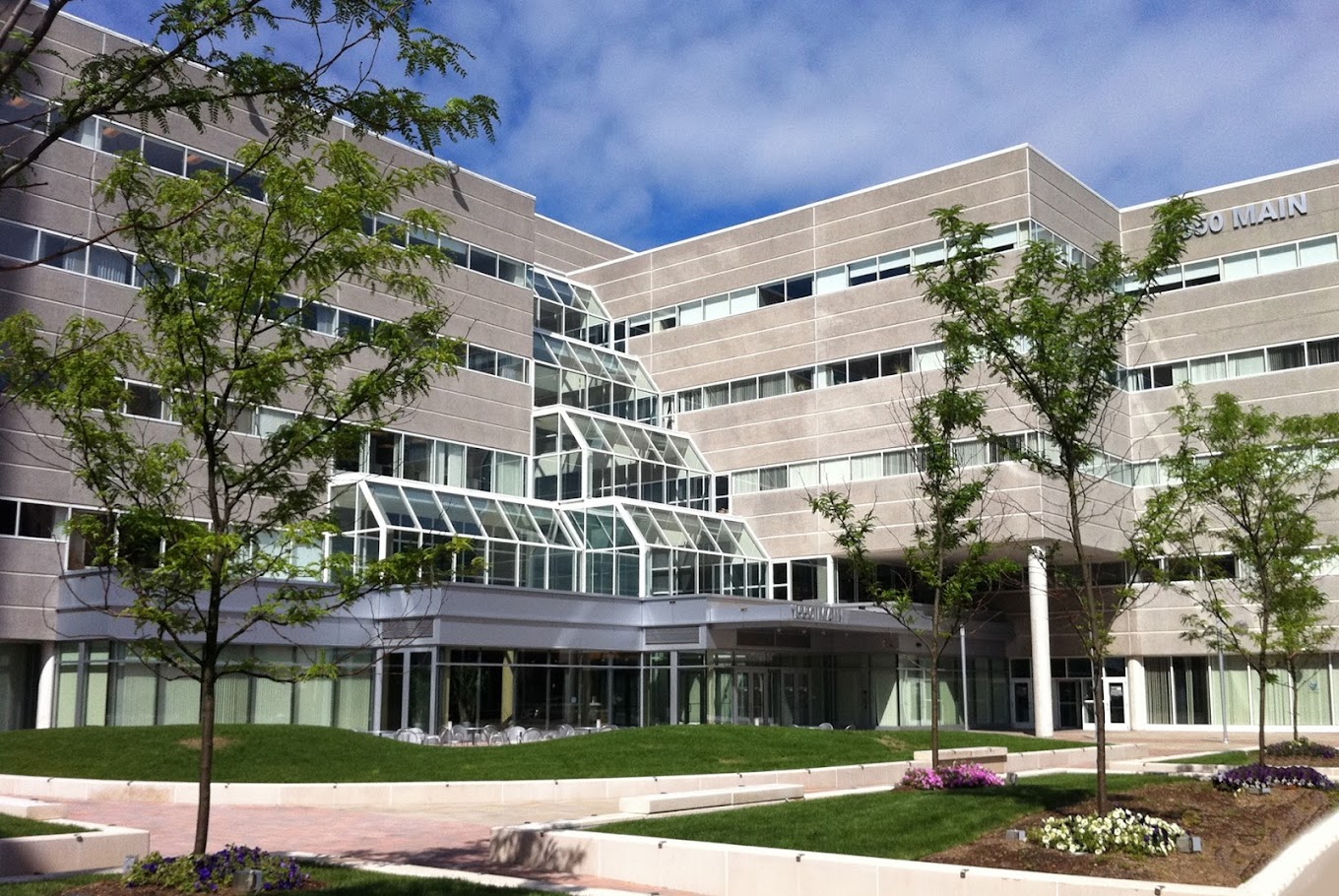
Alekman DiTusa, LLC is located at 1550 Main Street in Springfield, Massachusetts, serving Hampden, Hampshire, Franklin, and Berkshire counties and the Commonwealth. Our attorneys have represented survivors of childhood abuse in claims involving both individuals and institutions.
Free and confidential consultation: (413) 781-0000
This article is provided for general informational purposes and describes pending legislation as of August 24, 2026. It is not legal advice and does not create an attorney-client relationship. Deadlines under Massachusetts law depend heavily on individual facts, and legislation may change. Consult a licensed Massachusetts attorney about your circumstances.
Sources
Rep. John J. Lawn, Jr., opinion essay, The Boston Globe, May 6, 2026 — https://www.bostonglobe.com/2026/05/06/opinion/statute-limitations-child-sexual abuse-massachusetts/
Alekman DiTusa, LLC · 1550 Main Street, Springfield, MA · (413) 781-0000 7
SNAP, May 7, 2026 — https://snapnetwork.org/2026/05/07/rep-john-lawn-im-a-survivor of-child-sexual-abuse-calls-for-end-of-statute-of-limitations/
Massachusetts General Laws c. 231, § 85K —
https://malegislature.gov/Laws/GeneralLaws/PartIII/TitleII/Chapter231/Section85K
Mass.gov, Massachusetts law about child sexual abuse and statutes of limitations — https://mass.gov/info-details/massachusetts-law-about-child-sexual-abuse-and-statutes of-limitations
Massachusetts Legislature, Bill H.1829 — https://malegislature.gov/Bills/194/H1829 Massachusetts Legislature, Bill S.1169 — https://malegislature.gov/Bills/194/S1169
Enough Abuse, Massachusetts campaign page — https://enough
abuse.solidarity.tech/end-the-civil-statute-of-limitations-on-child-sexual-abuse-in massachusetts
Enough Abuse, Massachusetts prevention bills — https://enoughabuse.org/get vocal/ma-child-sexual-abuse-prevention-bills/
The Boston Globe, House primary care bill coverage, July 29, 2026 —
https://www.bostonglobe.com/2026/07/29/business/massachusetts-primary-care-bill/
New England Public Media, on the extended session calendar, July 27, 2026 — https://www.nepm.org/regional-news/2026-07-27/july-31-isnt-the-hard-deadline anymore-so-when-will-beacon-hill-actually-finish-up
State House News Service, July 24, 2026 —
https://www.statehousenews.com/news/executive/abuse-survivors-say-laws-that-failed them-are-now-on-their-side/article_6a6b0226-de69-4193-b546-e5a27b84ea14.html